Case study
Finite Moves, Infinite Tree
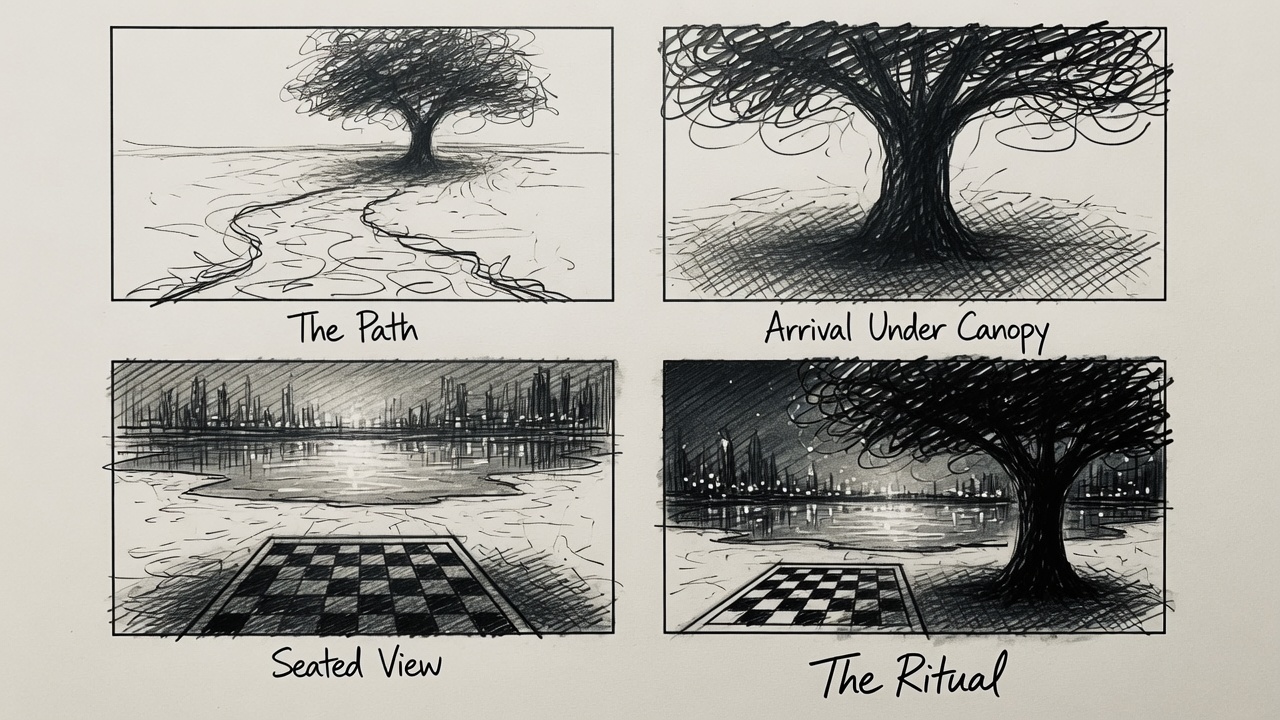
A library landscape installation staging chess against the indifference of living growth: logic held under the pressure of nature. Finite Infinite
The Dialectic Made Physical
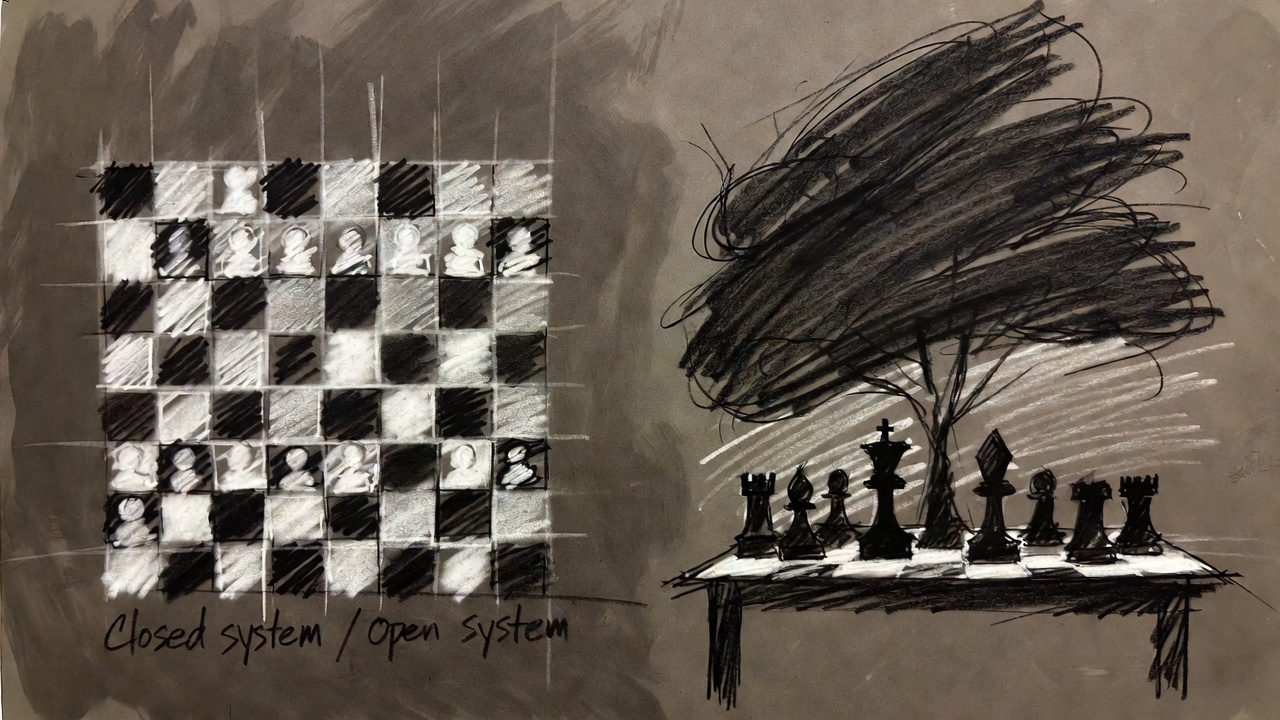
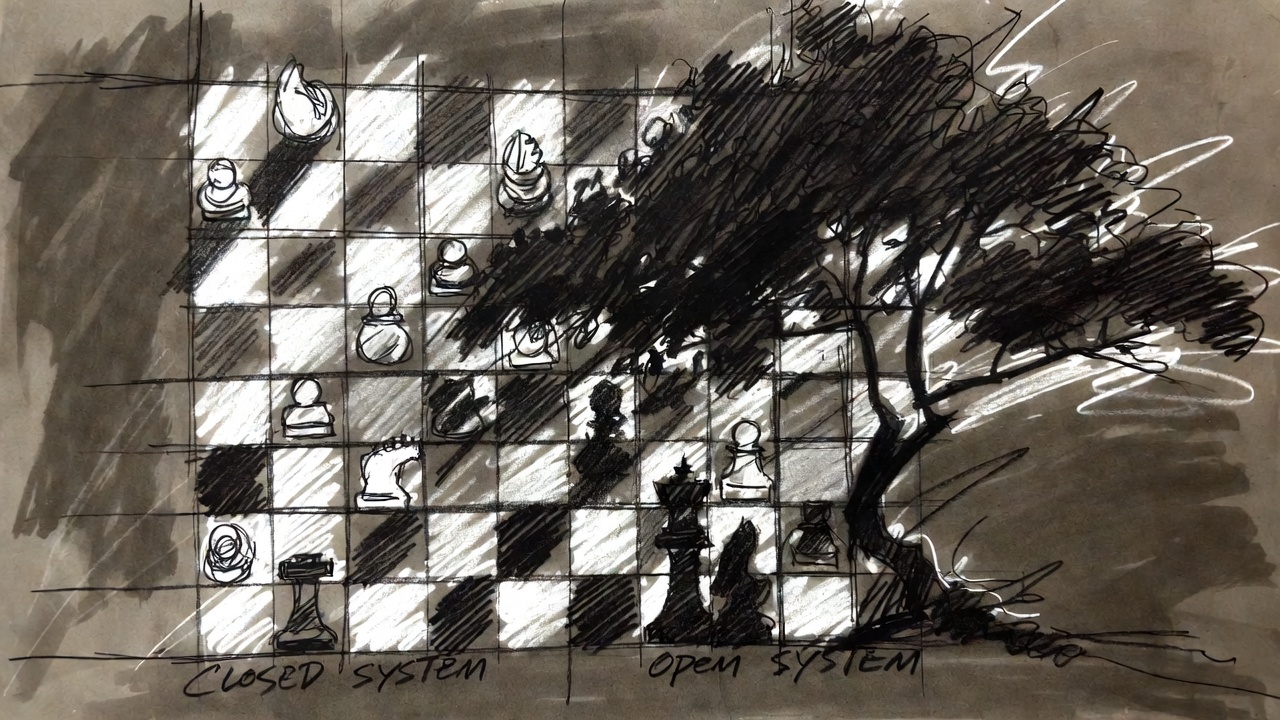
The concrete table is not neutral. Underlighting turns it into a luminous rectangle of artificial order suspended over the grass. The board is a rigid grid. The pieces accept rank, value, and rule. Immediately above and around that field, the trunks and canopy refuse the grid. Bark is irregular. Branches fork toward light and away from damage. Leaves fall by season, not by turn. Nothing in the tree recognizes the game, yet the game is forced to happen in its presence. That is the point. The player sits inside a contradiction rather than simply observing it.
Logic Under Pressure
Every move at the table is calculated under the quiet pressure of something that does not care about calculation. Nature does not oppose the player in the dramatic sense. It does something stronger: it continues. That continuation is the real counter-move. Logic is shown here as precise, intense, and local. Nature is shown as ambient, indifferent, and ongoing. The work is not about "playing with nature." It is about logic being forced to acknowledge its own temporary jurisdiction.
Neither Furniture Nor Sculpture
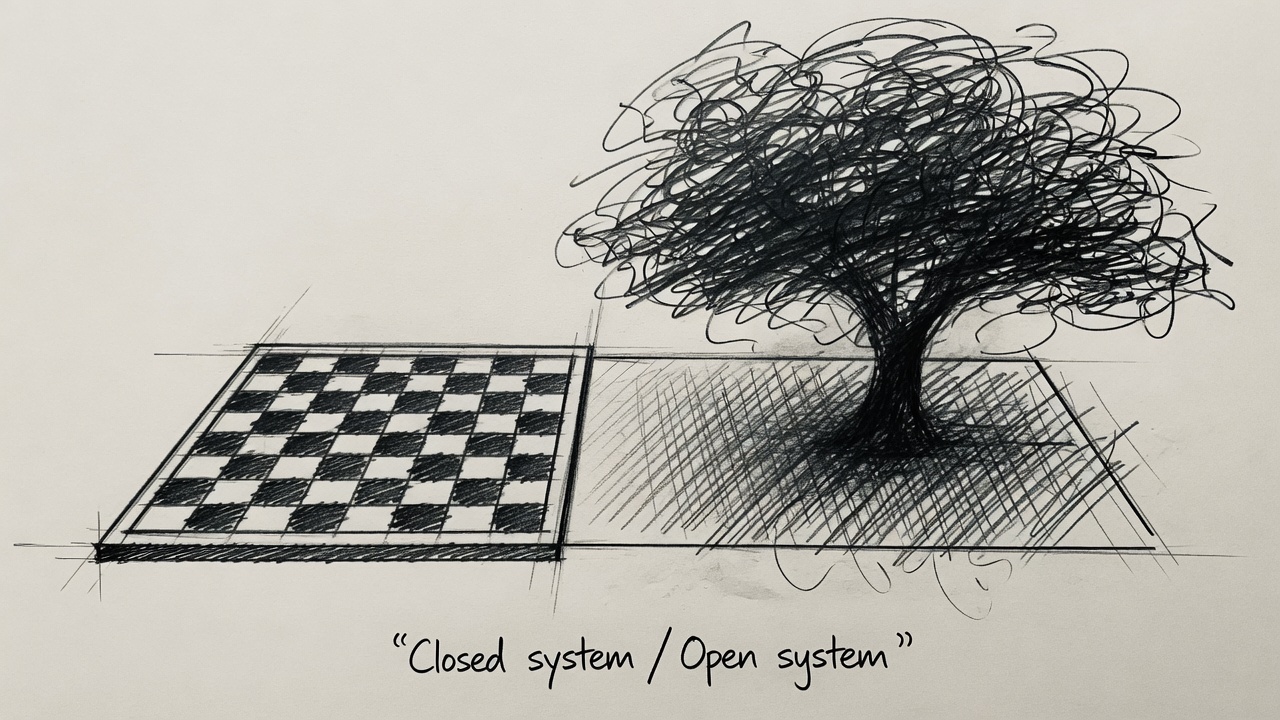
The object should not be reduced to a table, a sculpture, or a decorative landscape gesture. It operates as a dialectical device: two incompatible systems are held in the same place long enough for a human body to inhabit the contradiction. The underlighting is essential to that reading. At night, the logical system becomes hyper-legible as the natural system grows darker, broader, and less readable. The game becomes a small glowing act that can read either as defiance or as humility, depending on the temperament of the person sitting there.
Why It Belongs In A Library Landscape
Libraries have historically organized themselves on the side of logic: catalogues, indexes, classification, retrieval, and the belief that knowledge can be ordered. Their interiors are machines for extending that order. Placing this piece in the library landscape refuses the idea that knowledge ends there. It externalizes the other half of intelligence: what grows, decays, adapts, and remains indifferent to our systems of value. A reader who steps outside and sits at this table is no longer only a user of knowledge systems. They become a temporary mediator between the grid and the living form. That mediation is itself a form of intelligence the library should protect.